


Indulge in an easy-to-make lunch that’s rich, silky, and a classic complement to all kinds of Chinese dishes.
Table of Contents
Is Chinese Steamed Egg Healthy?Are There Other Styles Of Steamed Egg?FAQs & TipsServing SuggestionsChinese Steamed Egg
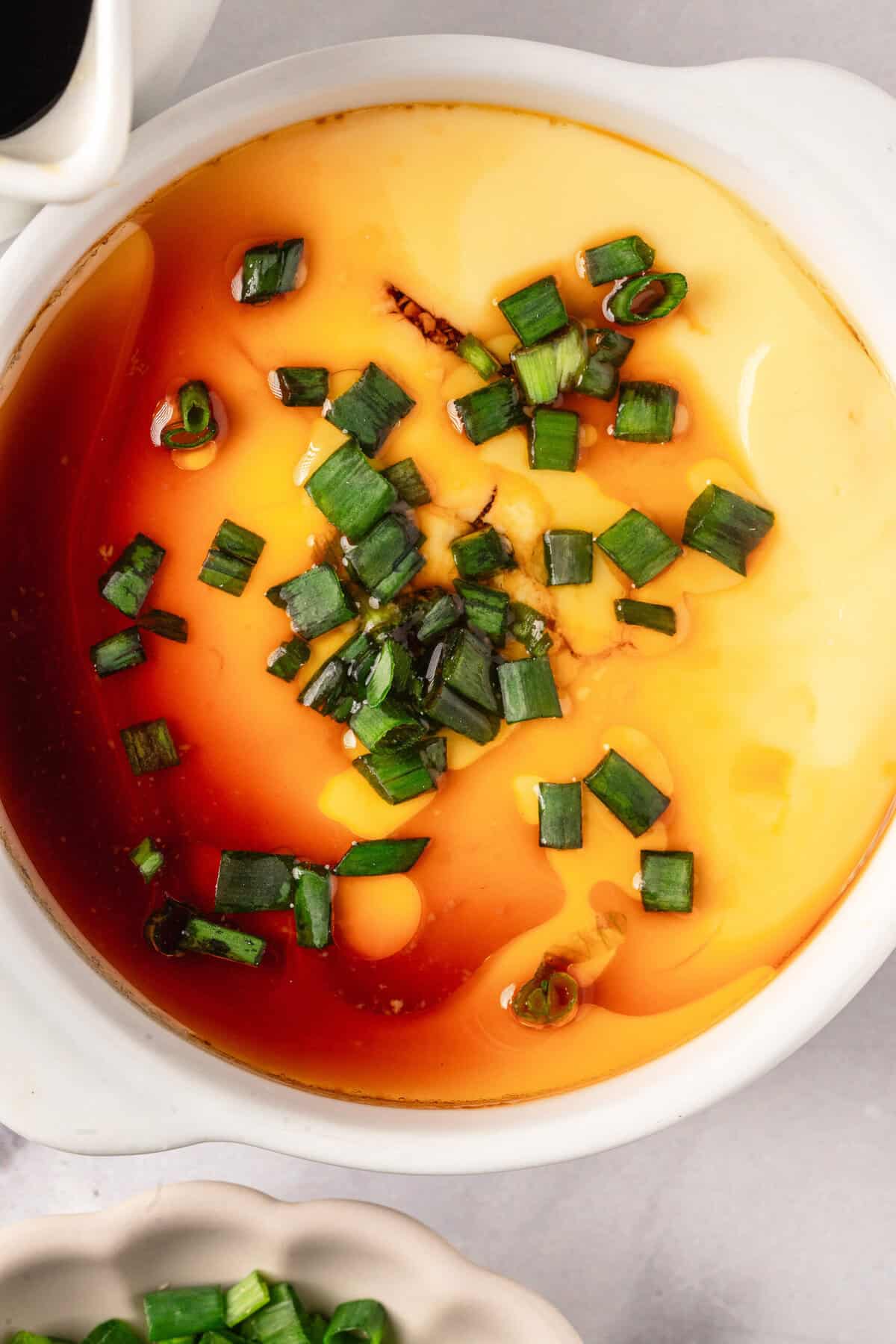
How many ways can you cook an egg? Well, this recipe shares one of the most iconic methods that results in a smooth umami custard. Also known as “water egg,” the Chinese steamed egg is a classic dish that has been circulating in Asia for centuries.
Some describe it as a custardy cross between an omelet and egg drop soup. Topped with dark and rich soy sauce and garnished with sliced scallions, this is a different way to serve your eggs and is sure to satisfy, whether as a side dish or light lunch.
Although it looks fancy, the recipe is straightforward and easy to follow. As long as you have a heatproof bowl and a steamer pot, you’re all set to transform two humble eggs into a luscious, velvety delight. Made by whisking eggs thoroughly and then steaming them in a shallow dish, Chinese steamed eggs are a simple yet elevated bowl of beauty that can be served for lunch or dinner.
Is Chinese Steamed Egg Healthy?
Since steamed eggs contain a decent balance of protein, good fats, and other nutrients, they can be considered a healthy dish. If, however, you need to reduce your salt intake, I suggest using both low-sodium soy sauce and broth. Likewise, if you or a loved one can’t have wheat, use gluten-free soy sauce instead of regular.
To boost the protein content, use chicken bone broth specifically. Another way to increase the health factor of this dish is to serve it with brown rice, which supplies a boost of fiber, magnesium, manganese, and B vitamins.
Are There Other Styles Of Steamed Egg?
While this recipe reveals tips and tricks for Chinese steamed egg, there’s also a Korean variation called gyeran-jjim. It’s traditionally made with an earthenware pot and includes fish broth and sauce instead of chicken broth. The Korean version turns out light and fluffy like a soufflé, whereas the Chinese steamed egg ends up creamy and custard-like. Both, however, are usually topped with sesame oil, soy sauce, and chopped green onions.
FAQs & Tips
If there are leftovers, simply cover the dish with plastic wrap and refrigerate for up to 3 days. I don’t recommend freezing, as this could ruin the velvety texture of the eggs. To reheat, cover the dish with a damp paper towel and microwave it for 30 seconds to 1 minute, until it’s warm all the way through.
Although it might seem tedious at first, don’t skip step two. Running the egg through a mesh sieve removes extra bubbles that could cause a bumpy final texture. Additionally, make sure that the water or broth you mix in is warm. This will ensure the eggs reach the right temperature to remain velvety.
Try some finely chopped chives or toasted sesame seeds. For additional flavor and a touch of heat, top with a chopped red chili sautéed till crisp in a little olive oil.
Serving Suggestions
Golden and luxurious steamed egg can make your kitchen feel like a classy Chinese restaurant in just 20 minutes. Pair it with some amazing Asian-inspired sides, such as Air-Fryer Wontons, Baked Egg Rolls, or Air-Fryer Potstickers. Additionally, you can brighten the whole table with a light Asian Healthy Broccoli Salad, Chinese Chicken Salad, or Vegetable Fried Rice.
Chinese Steamed Egg
Ingredients
Instructions
Nutrition
The post Chinese Steamed Egg appeared first on Food Faith Fitness.