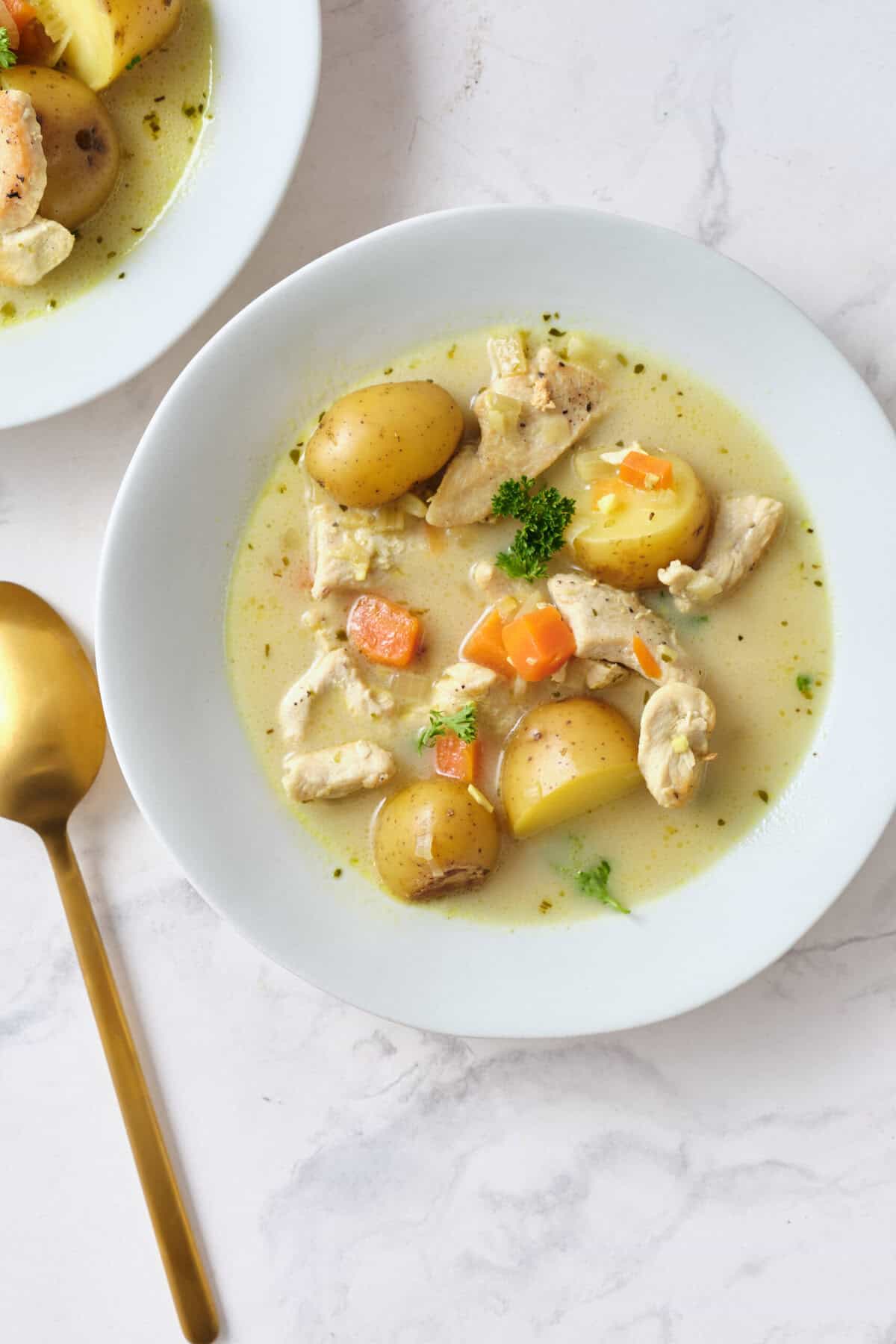


This one-pot meal will fill your stomach while delighting your taste buds!
Table of Contents
Tips for tailoring your chicken stewHow do I store leftovers?Serving suggestionsChicken Stew
Chicken stew is a thicker, heartier version of the well-known chicken soup. It’s like a hug in a bowl—comforting and warming anytime you want intense flavor without a lot of hassle. Best of all, it uses juicy chicken thighs so you don’t have to worry about dried-out white meat.
Like most stews, soups, and pots of chili, this recipe is even better the next day when the flavors have had a chance to meld overnight in the fridge. The most important bit of advice I can give you is to cut your chicken and vegetables into bite-sized pieces. You don’t want them to be so big that they don’t fit in your mouth, or so small that you feel like you’re eating soup rather than a filling stew. If your potatoes are still large after halving them, cut them again into thirds or quarters.
Many people wait for cooler weather to make stews, as they are often associated with chilly nights. However, this chicken version is lighter than some heavier beef stews, so feel free to enjoy it any time of year.
Tips for tailoring your chicken stew
Although this recipe packs in the flavor, you can still elevate it further by tailoring the ingredients to your preferences. One of my favorites is to cut back on the amount of regular potatoes and supplement them with sweet potatoes. The taste boost is spectacular. I also like to add a bag of frozen green beans or a bag of frozen corn and peas five minutes before adding the heavy cream. If you like, you can add a mix of both types of frozen vegetables to pack in the nutrients.
Other additions can include chopped bell pepper, mushrooms, zucchini, and canned diced tomatoes. Butternut squash, spinach, and kale are other delicious mix-ins. You can also substitute the listed spices with two teaspoons of herbes de Provence or Italian seasoning for some international flair.
How do I store leftovers?
Refrigerate leftover chicken stew within two hours of cooking to keep it safe from bacteria—it’s fine to put it in the fridge while still slightly warm. It’ll keep in an airtight container for up to 4 days. To freeze it, remove the potatoes, as their texture becomes mealy and mushy from the freeze-thaw process. Freeze the stew for up to 3 months in freezer-safe containers or zippered bags, removing excess air (which is why I prefer silicone bags). Thaw overnight in the fridge. Reheat on the stove or in the microwave until it reaches an internal temperature of 165°F, stirring well to recombine any separated cream.
Serving suggestions
Serve chicken stew with some crusty bread, dinner Potato Rolls, or this delicious Bread Without Yeast. Stew and salad is as good a combination as soup and salad, so try this dish with a nice Spinach Salad, Jerusalem Salad, Kale Salad, or Warm Brussels Sprouts Salad. Add a Lemon Cream Pie or Dutch Oven Peach Cobbler for dessert.
Chicken Stew
Ingredients
Instructions
Nutrition
The post Chicken Stew appeared first on Food Faith Fitness.