
For a quick, weeknight dinner, try the Japanese comfort food dish Oyakodon and surprise your family with a fantastic meal.
Table of Contents
Uncovering the history of oyakodonHow do I store leftovers?Serving suggestionsOyakodon
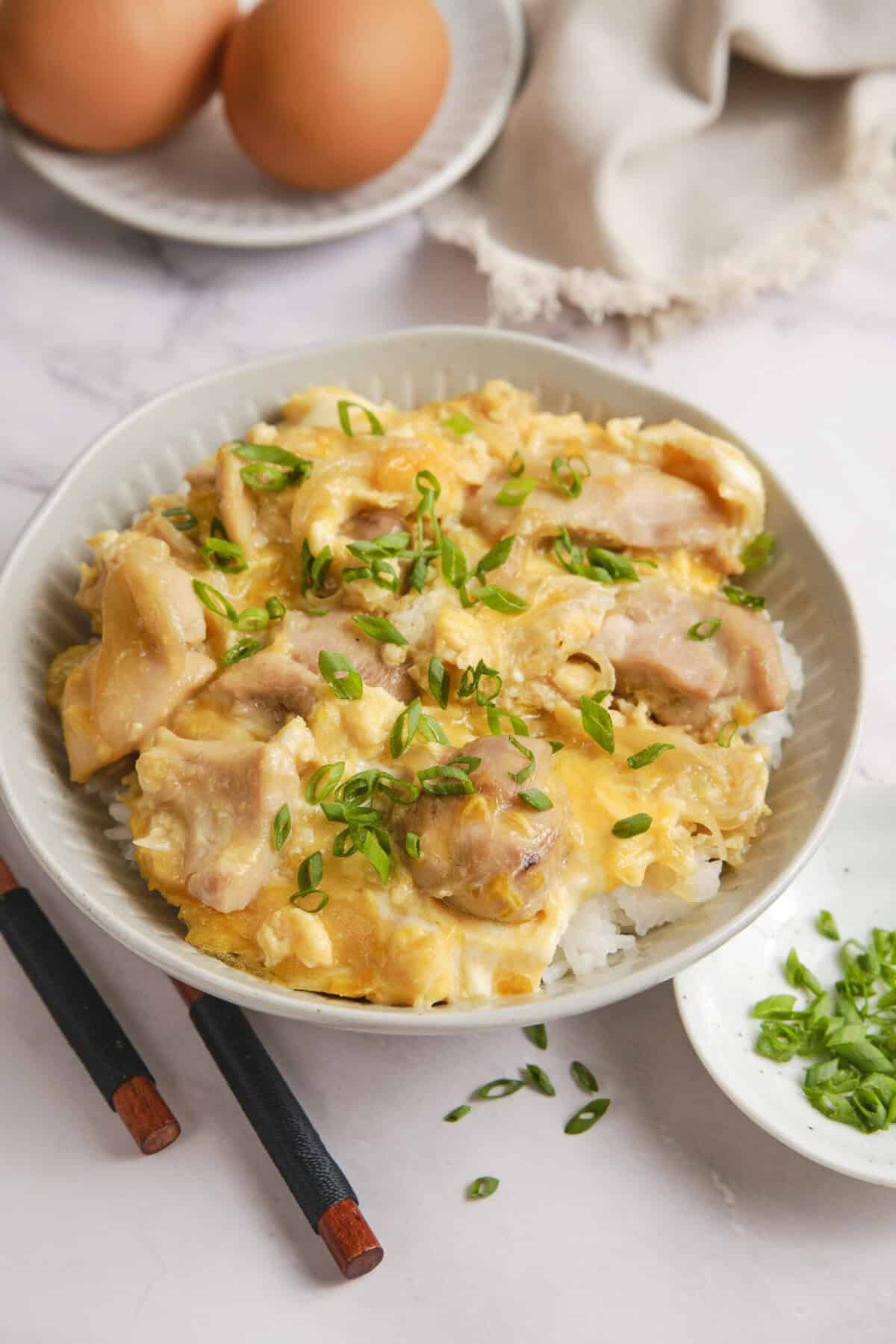
Every culture has its comfort food, and in Japan, don’t be surprised to find oyakodon on most people’s lists. After all, the translation of this dish is “parent-and-child” (oya-ko) and “rice bowl” (don). The parent is the chicken, and the egg is the child. The mixture is served atop a bowl of rice and makes for a quick and easy weekday dinner. In Japan, you find oyakodon served as part of a fast, takeout lunch at many restaurants and food stalls.
Oyakodon is a contrast of flavors and textures, featuring small grains of rice, tender chunks of succulent chicken thighs, and creamy cooked egg, all in a savory sauce that infuses everything with incredible umami. It’s no wonder that this crave-worthy Japanese rice bowl is so popular.
The ease and simplicity of this delicious meal will astonish you as it requires only eight ingredients (nine if you count the optional garnish) and is ready in under thirty minutes. The rice cooks separately, and everything else is prepared in one skillet, making cleanup a breeze. If you plan your week’s meals, you can even cook up a big pot of rice and keep it in the refrigerator, cutting down on preparation and cooking time.
For those starting on their Japanese cooking, dashi is a savory stock made from water, dried seaweed (kombu), and dried bonito flakes (katsuobushi). You can purchase dashi bags (similar to tea bags) or dashi granules, but both may contain added salt and other additives. The bags may also contain nylon or plastic fibers, which is why using chicken, vegetable, or beef stock (broth) is another option. While it may not be as authentic as using dashi, the finished dish will still taste great.
Uncovering the history of oyakodon
I always find it fun to delve into the history of dishes, as many foods have conflicting origins, and oyakodon is one such dish. It is widely attributed to a Tokyo restaurant called Tamahide, where a customer enjoyed eating leftover meat and a sweet sauce used in sukiyaki called warishita with rice and an egg. He called this dish “oyako-ni,” for parent and child stew. The restaurant owner’s wife transformed this into a one-dish meal served over rice in 1891, which is the original oyakodon.
Now for the conflicting version. The Osaka theory credits the dish to a chef at the Osaka restaurant Torikiku in 1903, where it was served at a domestic exposition. Since the Tokyo version was created twelve years earlier, it is that dish that is most commonly accepted as being the originator.
How do I store leftovers?
Allow leftovers to cool to room temperature before refrigerating the chicken and egg mixture and the rice separately in airtight containers for up to 4 days. Reheat leftover oyakodon in a pan on the stove on medium heat or in the microwave for 2-3 minutes.
Serving suggestions
Oyakodon is a meal in a bowl, and while it doesn’t need anything else, there are some dishes you can serve alongside to enhance the meal. This Sunomono Recipe for Japanese cucumber salad is an ideal side dish, paired well with a tossed green salad with Miso Dressing or Carrot Ginger Dressing. If you enjoyed this recipe, you might also like Okonomiyaki (Japanese pancakes).
Oyakodon
Ingredients
Instructions
Nutrition
The post Oyakodon appeared first on Food Faith Fitness.