
Craving fried chicken that bursts with umami flavor? Try this Japanese version.
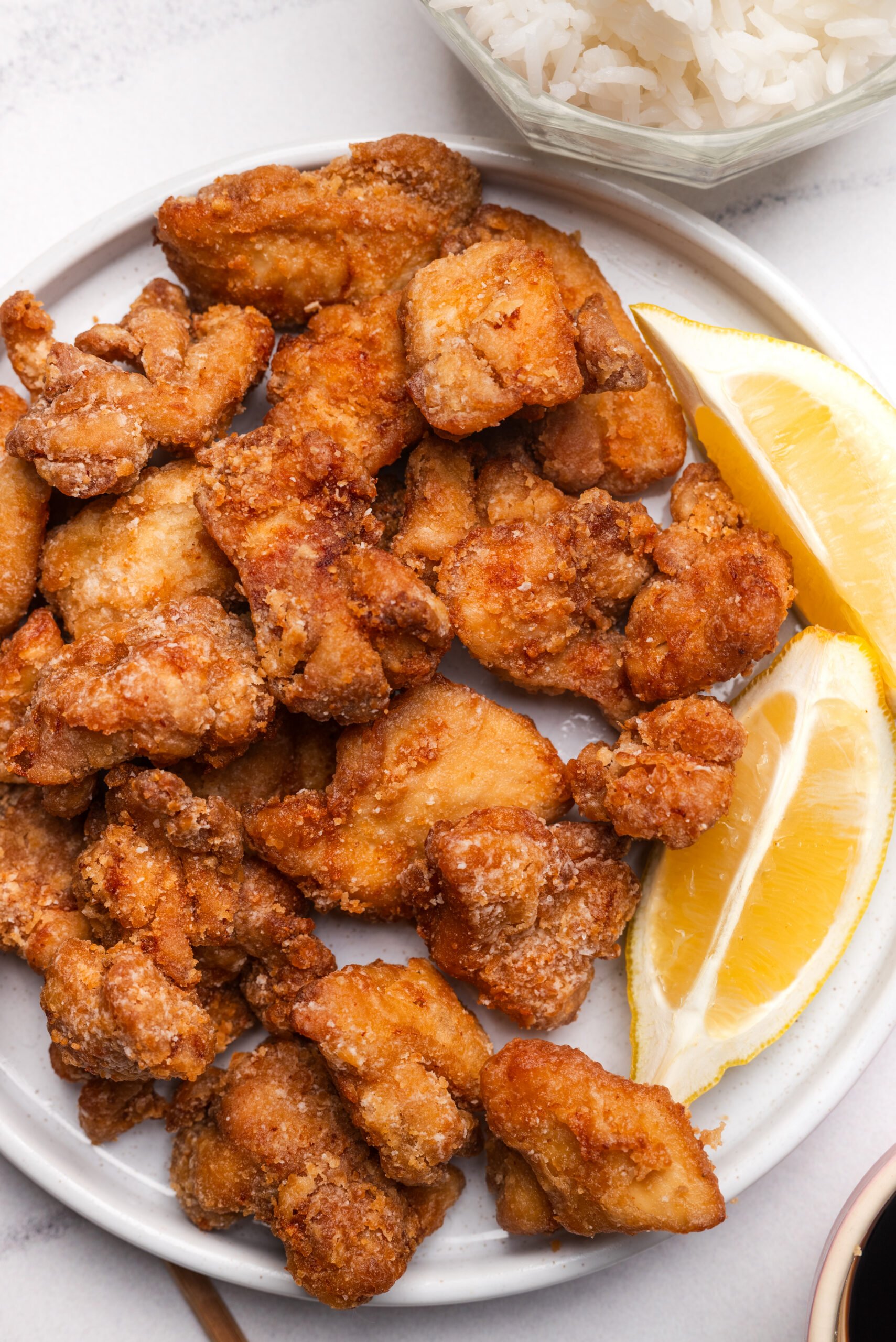
I used to go out for Japanese food all the time with my friends. But over the years, I’ve opted for homemade variations instead. It’s not that there’s anything wrong with going out, but rather that I’ve become quite passionate about trying international dishes myself. Cooking recipes from other cultures requires curiosity and creativity, both of which I need to keep my days and nights alive. So, join me for this one-of-a-kind Japanese fried chicken, also known as karaage.
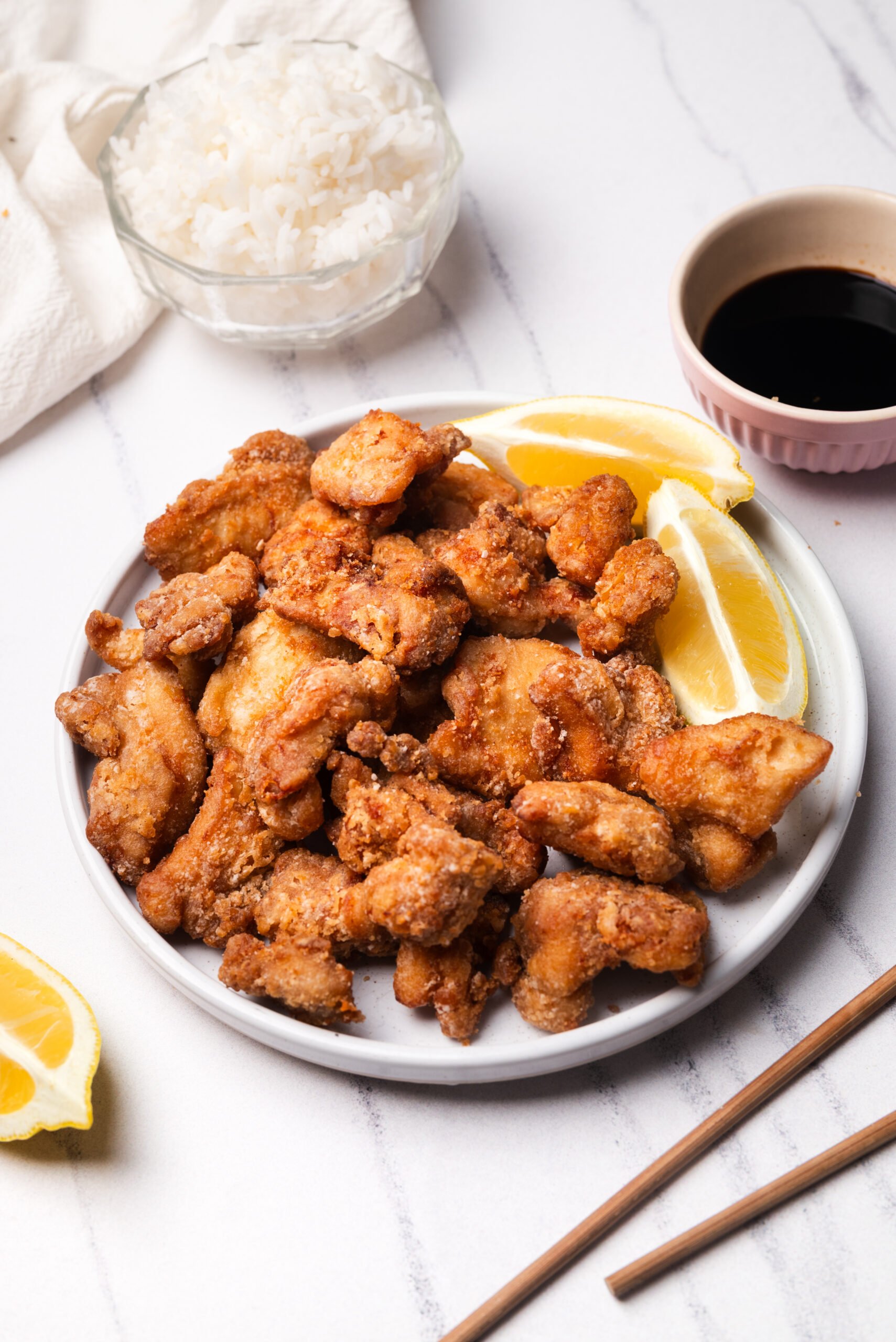
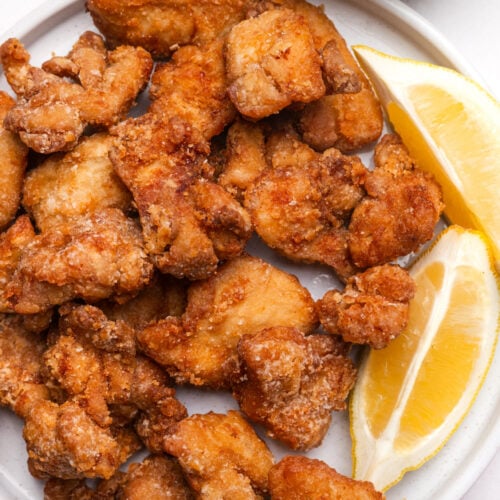
Literally translating to “Chinese-style deep-fried” in Japanese, karaage refers to the style of cooking meat that involves marinating, coating in potato starch, and deep-frying in oil. That’s the simple and straightforward method of cooking you see here. Each juicy piece of chicken turns out golden brown with a rich and crispy outside that rivals even that of the southern US. But this isn’t anything like KFC, so don’t get it twisted! Each bite of this chicken is tangy, savory, and bursting with umami flavors that only Asian cuisine can accomplish. So, if you and your family want to level up your fried chicken game, consider this recipe a gold star!
The difference between karaage and tempura
On the surface, the two types of cooking seem almost identical. After all, both involve frying food until it’s nice and crisp. But the main difference—which is actually a big one when you taste-test both—is that karaage meat is marinated and coated in potato flour, while tempura calls for a batter. Tempura meat or vegetables, although they can be seasoned, are not usually marinated before being fried, and so they turn out with a milder taste that’s best complemented by a sweet and spicy dipping sauce. Karaage is special because it doesn’t need a sauce with such a juicy, flavorful marinade on the inside.

How do I store leftovers?
Let your leftover karaage cool to room temperature, and then transfer it to an airtight container. Refrigerate for 3-4 days or freeze it in a freezer-safe bag for up to 3 months. Thaw your leftovers in the fridge overnight before reheating them either in the oven at 350°F for 10-15 minutes or in the air fryer for 5 minutes.
Serving suggestions
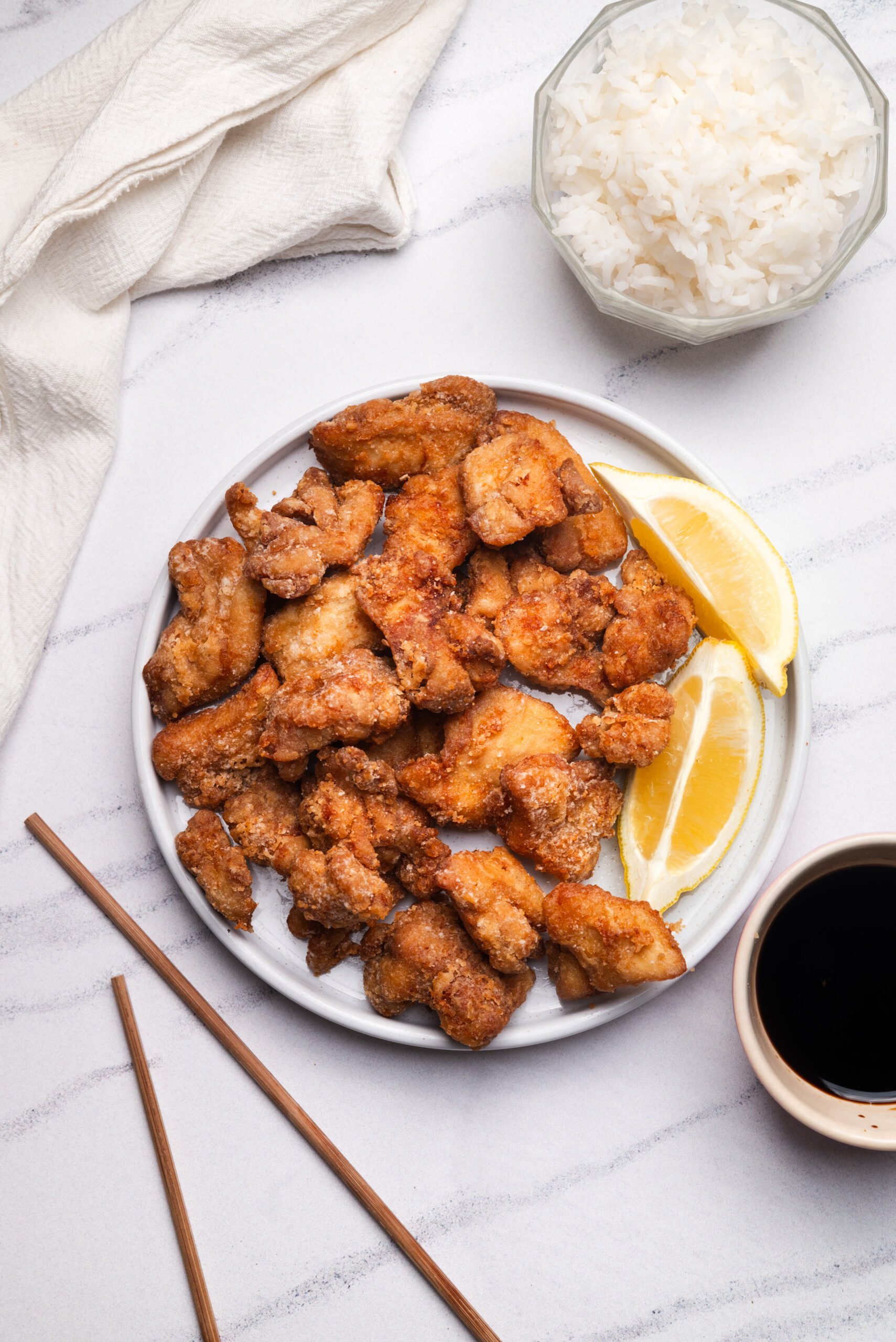
Craving a simple, stick-to-your-ribs kind of Japanese dinner? Complement your karaage with Hibachi Fried Rice and Sunomono (Japanese Cucumber Salad). I also sometimes like to mix it up by serving karaage for brunch with Okonomiyaki (Japanese Pancakes) and sesame-coated Hibachi Vegetables. But you also don’t need to stick to traditional Japanese dishes. Feel free to craft some sweet and spicy Asian Brussels Sprouts or Asian Cabbage Salad for more refreshing greens.
Karaage Recipe
Ingredients
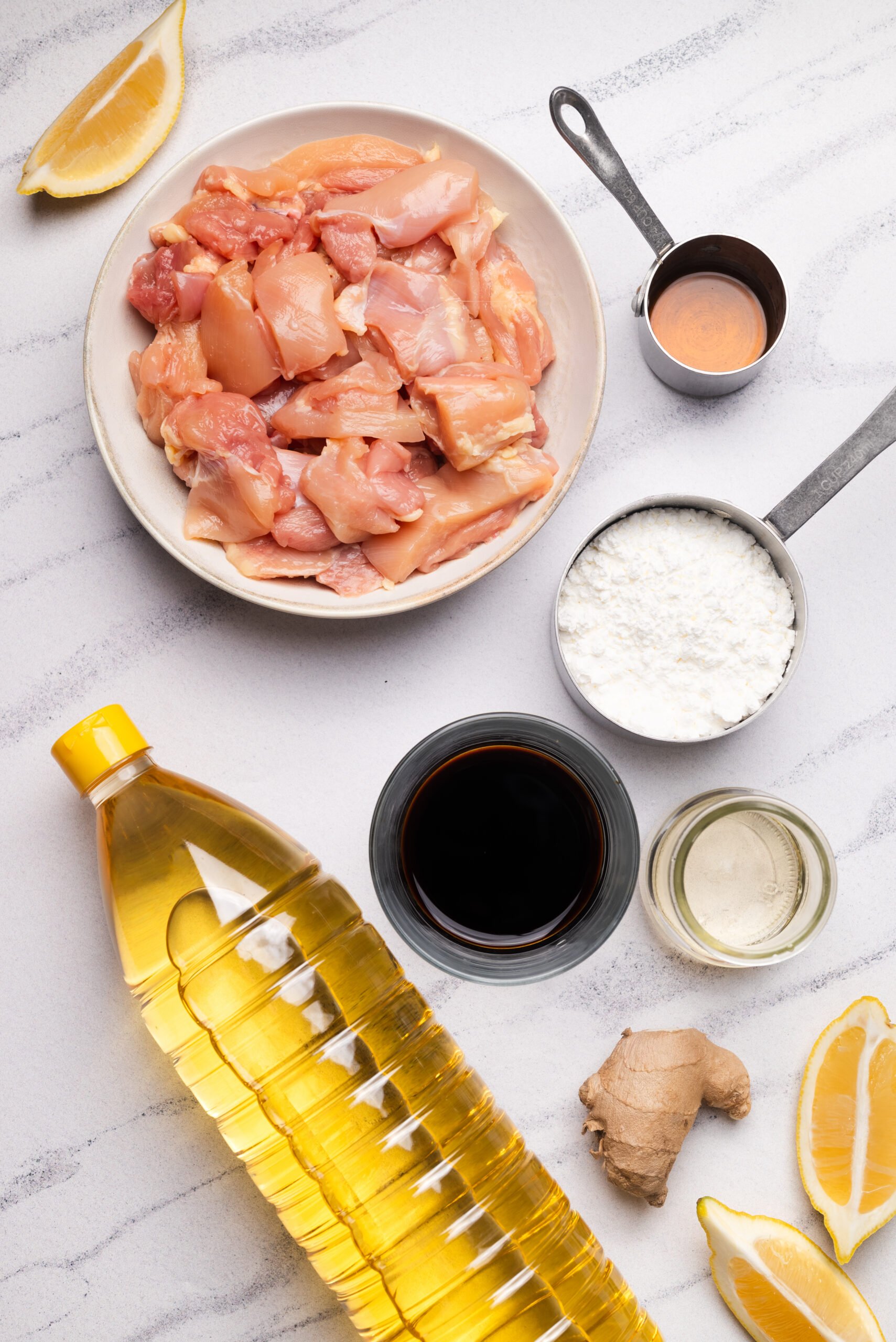
- 4 teaspoons soy sauce
- 2 teaspoons cooking sake
- 1/2 teaspoon mirin
- 2 teaspoons freshly grated ginger with juice
- 3/4 pound chicken thigh fillets patted dry and cut into 1-inch pieces
- Potato starch or corn flour, as needed for coating chicken
- Vegetable oil for deep frying
- Lemon wedges for serving (optional)
Instructions
-
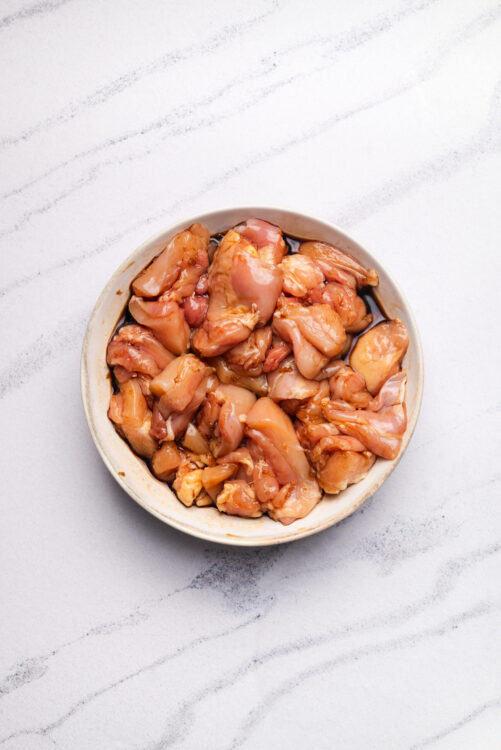
In a bowl, mix the soy sauce, cooking sake, mirin, and grated ginger. Add the chicken, mix well, and marinate in the refrigerator for 30 minutes.
-
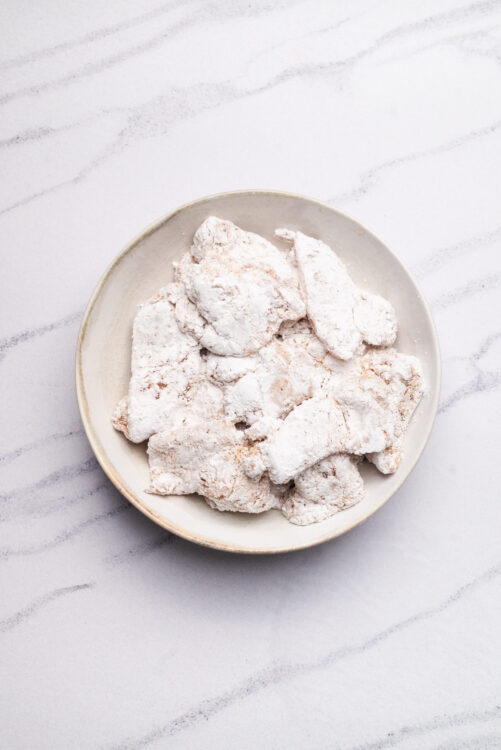
Remove the chicken from the marinade and evenly coat each piece with potato starch.
-
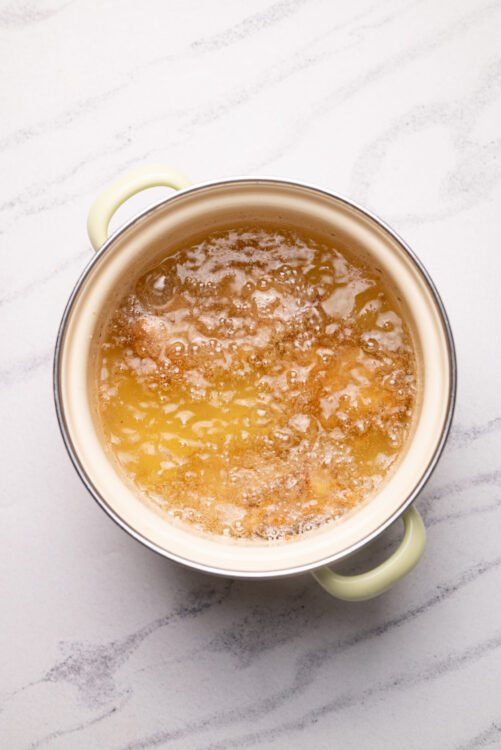
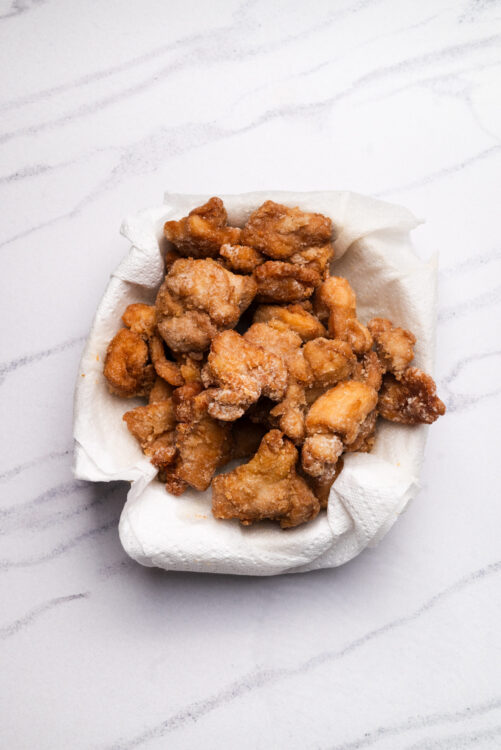
Heat enough oil in a deep pot to reach 1 1/2 inches depth and heat to 320°F. Fry the chicken in small batches for about 3 minutes until lightly golden. Remove and drain on paper towels.
-
Increase the oil temperature to 375°F. Fry the chicken in small batches for about 1 minute until the exterior is crisp and golden.
-
Transfer the chicken to a serving plate and garnish with an optional lemon wedge.
-
Enjoy your crispy Japanese fried chicken!
Nutrition
The post Karaage Recipe appeared first on Food Faith Fitness.