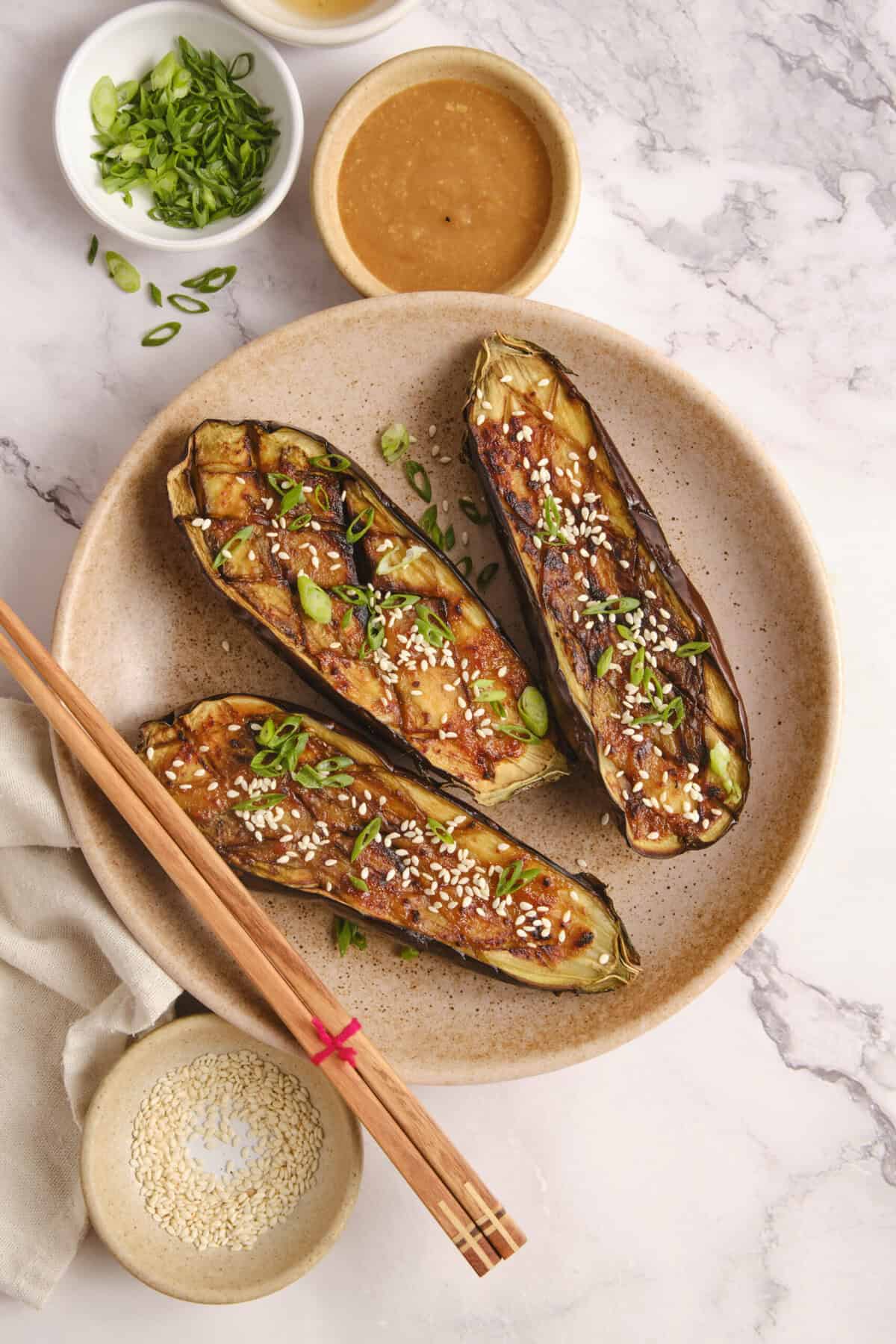


Transform your eggplant into a miso-glazed delicacy that rivals any restaurant version.
Table of Contents
Is Miso Eggplant Healthy?Ingredient Highlight: Miso PasteFAQs & TipsServing SuggestionsMiso Eggplant
Eggplant is one of those ingredients that often attract us in the produce section but end up forgotten in the fridge. I’m not entirely sure why this happens, but it’s a common issue in my household. The same thing happens for us with butternut squash, spaghetti squash, and certain large vegetables.
Over the years, I’ve worked to reduce food waste, so this doesn’t happen as often anymore. But when I talk to friends, they share the same experience with these large, sometimes intimidating ingredients that require a bit of recipe planning.
When it comes to eggplant, though, this recipe is one of my favorite ways to prepare it. Miso and eggplant are a match made in smoky, umami heaven. True story—I once paid $23 for a dish like this at a fancy downtown restaurant. Did I feel silly? Sure. But that was before I realized I could make something even better at home.
Is Miso Eggplant Healthy?
This Japanese miso eggplant recipe is nutritious, delicious, and fully vegan. Eggplant is relatively low in calories and contains nutrients like fiber and potassium. If you’re looking to reduce the sodium content of this recipe, you can opt for a low-sodium miso paste and either reduce the amount of soy sauce or use a low-sodium variety. For a gluten-friendly take on this dish, be sure to choose gluten-free miso, tamari, or soy sauce.
Ingredient Highlight: Miso Paste
Miso paste is a staple in Japanese cooking, adored for its distinct and complex umami flavor that complements a vast range of dishes. Miso is traditionally made from fermented soybeans. These are combined with salt and koji, a fermenting agent, and left to ferment for various lengths of time. The length of fermentation determines the depth and flavor of the paste—with shorter fermentation resulting in a milder flavor and longer fermentation producing a sharper, more robust bite. Miso comes in various types, from the light and slightly sweet white miso to the darker and more intense red miso. It’s commonly used in soups, marinades, dressings, and glazes. From tasty soups to an eggplant glaze, miso is a versatile culinary ingredient sure to make each dish stand out.
FAQs & Tips
Store leftover miso eggplant in an airtight container and refrigerate for up to 3 days. Freezing is not recommended, as it will affect the texture of the dish upon thawing.
While you can certainly opt for a different kind of miso paste, keep in mind that this may change the flavor significantly. White and yellow miso tend to be milder and sweeter in flavor, while red miso has a more intense flavor. The darker the miso, the stronger the flavor. Adjust the amount of miso paste accordingly.
To add some heat, try mixing a dash of sriracha or red chili paste into the glaze. You can also add crushed red pepper flakes at the end of this recipe for a nice kick.
Serving Suggestions
There are numerous dishes you could pair with this Japanese miso eggplant. You might serve your eggplant with a delicious main course like Air-Fryer Teriyaki Salmon, Chicken Katsu, or Teriyaki Chicken Wings. Or you could try a big, crispy Asian Cabbage Salad with a side of these addictive Air-Fryer Shishito Peppers.
Miso Eggplant
Ingredients
Instructions
Nutrition
The post Miso Eggplant appeared first on Food Faith Fitness.