
Japanese rice balls stuffed with a simple savory tuna filling make a perfect snack or light lunch!
Table of Contents
Fillings, fillings, and more onigiri fillingsHow do I store leftovers?Serving suggestionsOnigiri Recipe
This may sound unusual, but the first time I saw onigiri was in a game that I play almost daily on my phone. There, bouncing around with lots of other fun and colorful shapes, was a triangular white shape of rice with a small piece of nori (seaweed). I could tell that it was something similar to sushi, but one I’d never heard of or seen before—until I discovered this onigiri recipe.
Better still, I now have a new and easy way to enjoy canned tuna. I had no idea that onigiri had a filling inside, and I’m here to tell you that it makes for a delicious treat. By the way, you can swap in canned salmon or chicken for variety. But the real star here is the rice.
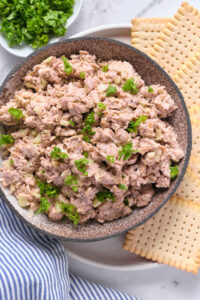
As someone who appreciates a snack for long drives, onigiri is a worthy option. For one thing, it’s not messy. The sushi rice sticks together so well, thanks to its high starch content. More importantly, that savory blend of tuna, mayonnaise, and soy sauce delivers incredible flavor in every bite. No sauce is needed, although when enjoying this at home, I always prepare a dipping sauce.
These little rice balls are as much fun to make as they are to eat. You place a ball of rice in your salted palm, indent the middle, and add a teaspoon or two of your chosen filling. Top with a little more rice, compress it closed, and shape it into the triangle you see in the photos—easy peasy. All in all, onigiri are excellent grab-and-go snacks, perfect for the movies (skip the popcorn), the beach, or simply filling a spot in your lunchtime bento box.
Fillings, fillings, and more onigiri fillings
I was amazed to learn about the variety of fillings often used for onigiri. There are so many options! Some of the more popular fillings in Japan include:
Furikake – Flavored seasoning flakes mixed into the rice
Kombu – Seaweed simmered in a sweet and savory mixture
Okaka – Bonito flakes mixed with soy sauce
Shake – Salted, cooked salmon
Umeboshi – Japanese pickled plum (salty and sour)
Don’t these sound delicious? And yes, I’m aware you may not find these ingredients at Kroger or Costco. However, I’d bet that there’s an Asian grocery store not too far from your neighborhood. If not, you’d be surprised at what’s available online these days. For now, we’re keeping it simple with tuna, but once you get the hang of this recipe, feel free to branch out!
How do I store leftovers?
Onigiri are best the day you make them! That’s simply how sushi-style recipes are. That said, you can store them in your fridge for up to 3 days. Remove the nori (it’ll become soggy) and ensure each rice ball is wrapped in plastic before storing them in an airtight container. Keep in mind that the rice will harden, and the texture will simply not be as fresh. To serve, I recommend using your microwave to soften the rice. Cover the onigiri with a damp paper towel and microwave at 20-second intervals until slightly warm and softened. Also, don’t forget to wrap it with fresh slices of nori!
Serving suggestions
As mentioned earlier, you’ll want some great dipping sauces to serve with onigiri. While traditionally used for katsu dishes, Tonkatsu Sauce‘s tangy flavor works well for onigiri. I also enjoy Miso Sauce, Eel Sauce, and Yum Yum Sauce—are they specifically made for onigiri? Not exactly. But they work, trust me!
Enjoy the onigiri as part of a light meal. This Miso Soup Recipe is quick, easy, and tasty, especially on a cold day. Likewise, a simple Sunomono Recipe (Japanese Cucumber Salad). You can also add a side of Tamagoyaki, a unique egg dish with a slightly sweet flavor that balances the savory onigiri.
Onigiri Recipe
Ingredients
Instructions
Nutrition
The post Onigiri Recipe appeared first on Food Faith Fitness.